Non-Toxic Kitchen Essentials: A Complete Guide
Creating a non-toxic kitchen does not require replacing everything at once. Many people start with small changes. Over time, those changes create a safer cooking environment and healthier habits.
Unlock 300+ Easy Recipes You’ll Actually Make
New recipes sent daily. Free forever!

A non-toxic kitchen focuses on materials that reduce chemical exposure while improving the quality of your cooking tools. Many common kitchen items contain coatings, plastics, or materials that release unwanted substances when exposed to heat.
This guide explains the most important non-toxic kitchen essentials and recommends reliable tools that help you build a cleaner and safer kitchen.
Why Switch to a Non-Toxic Kitchen?

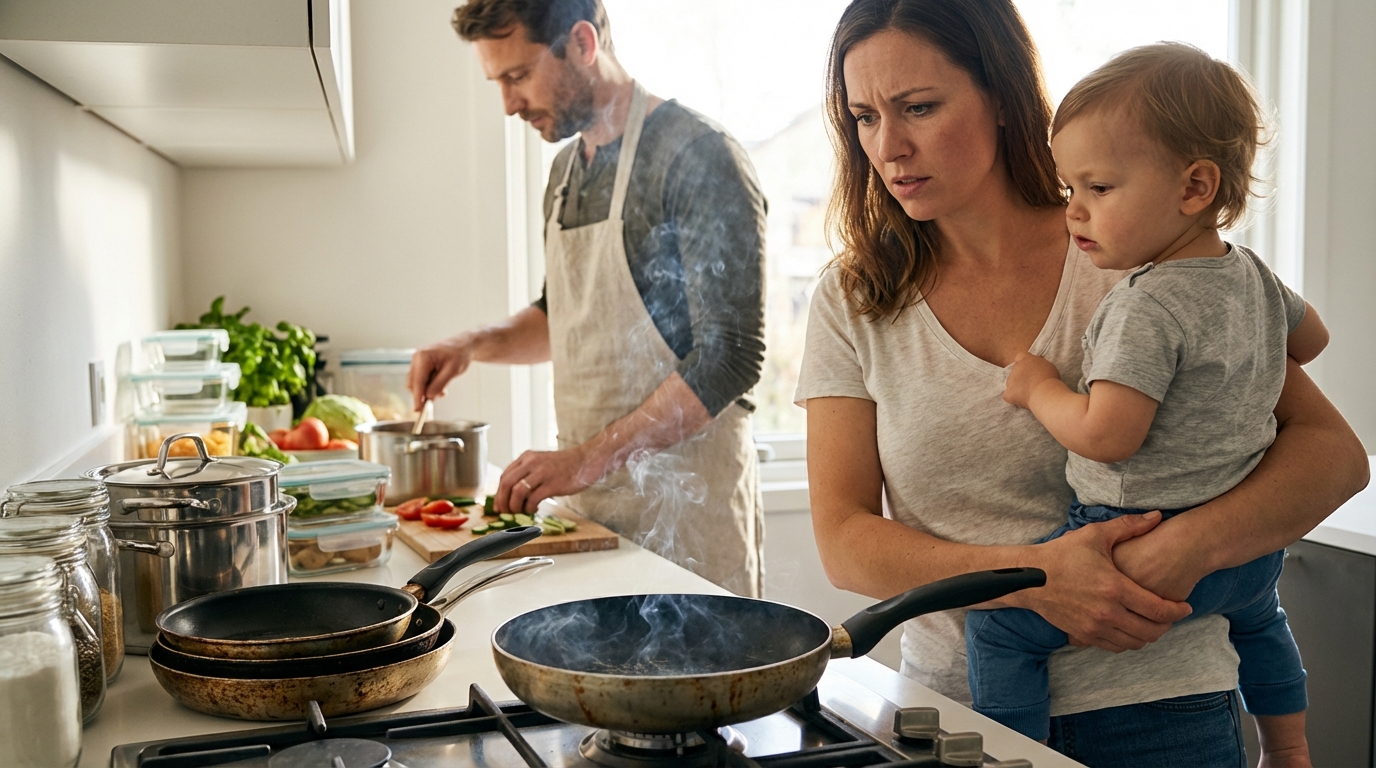
Many kitchens rely heavily on plastic utensils, non-stick coatings, and synthetic storage containers. Over time these materials break down.
Common concerns include:
• chemicals released from damaged non-stick cookware
• plastic containers absorbing food residue
• coatings degrading with high heat
• cleaning products leaving chemical residues
A non-toxic kitchen uses durable materials such as stainless steel, glass, wood, and cast iron.
Benefits include:
• safer cooking surfaces
• longer lasting tools
• easier food storage
• better kitchen organization
1. Stainless Steel Cookware (One of the Safest Options)
Stainless steel cookware is widely used in professional kitchens because it performs well without chemical coatings.
A great example is the MICHELANGELO Tri-Ply Stainless Steel Skillets Set.
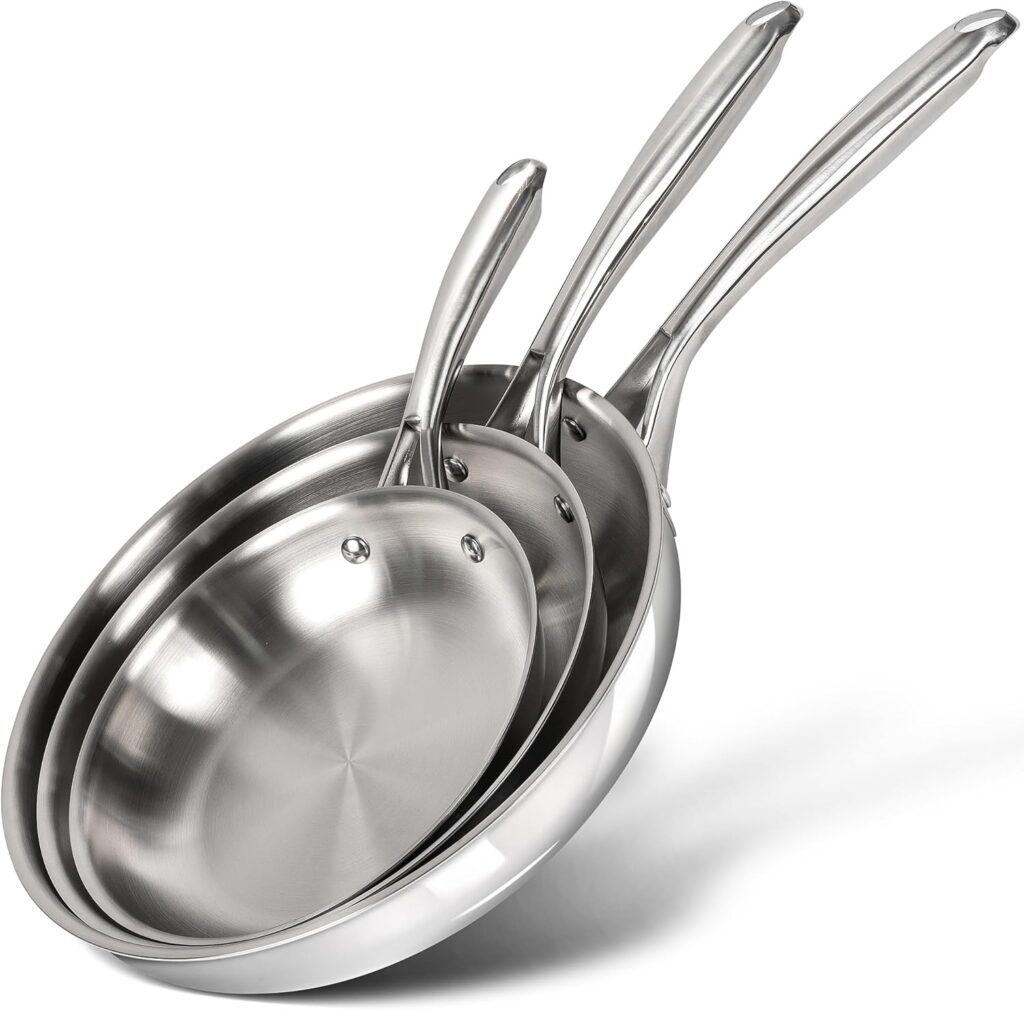
Why this skillet set is a strong choice:
• tri-ply stainless steel construction distributes heat evenly
• no chemical non-stick coating
• durable enough for everyday cooking
• compatible with many cooktops
This type of skillet works well for:
• sautéing vegetables
• cooking eggs
• searing meat
• preparing sauces
Tip
Preheat the pan for a minute before adding oil. Stainless steel performs better when properly heated.
2. Glass Food Storage Containers
Food storage is one of the easiest places to eliminate unnecessary plastic.
The Razab Glass Food Storage Containers Set provides a durable and safe alternative.
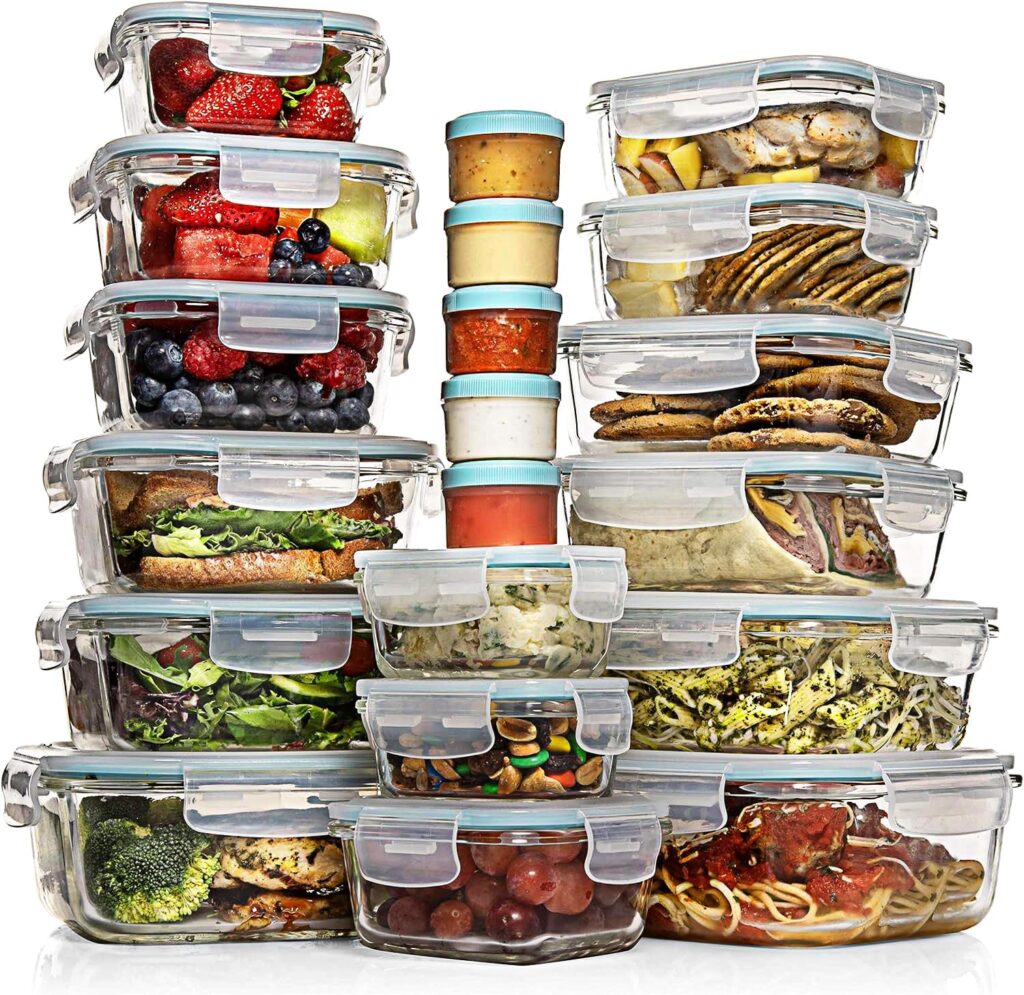
Why glass containers work well:
• non-porous surface that does not absorb odors
• ideal for leftovers and meal prep
• microwave and refrigerator friendly
• airtight lids keep food fresh longer
Best uses:
• storing leftovers
• organizing weekly meal prep
• storing cut fruits and vegetables
Tip
Let hot food cool slightly before sealing the lid to prevent pressure buildup.

3. Stainless Steel Cooking Utensils
Many cooking utensils sold today are made from plastic that melts or degrades under heat.
A safer alternative is stainless steel tools such as the Zulay Kitchen Stainless Steel Cooking Utensil Set.
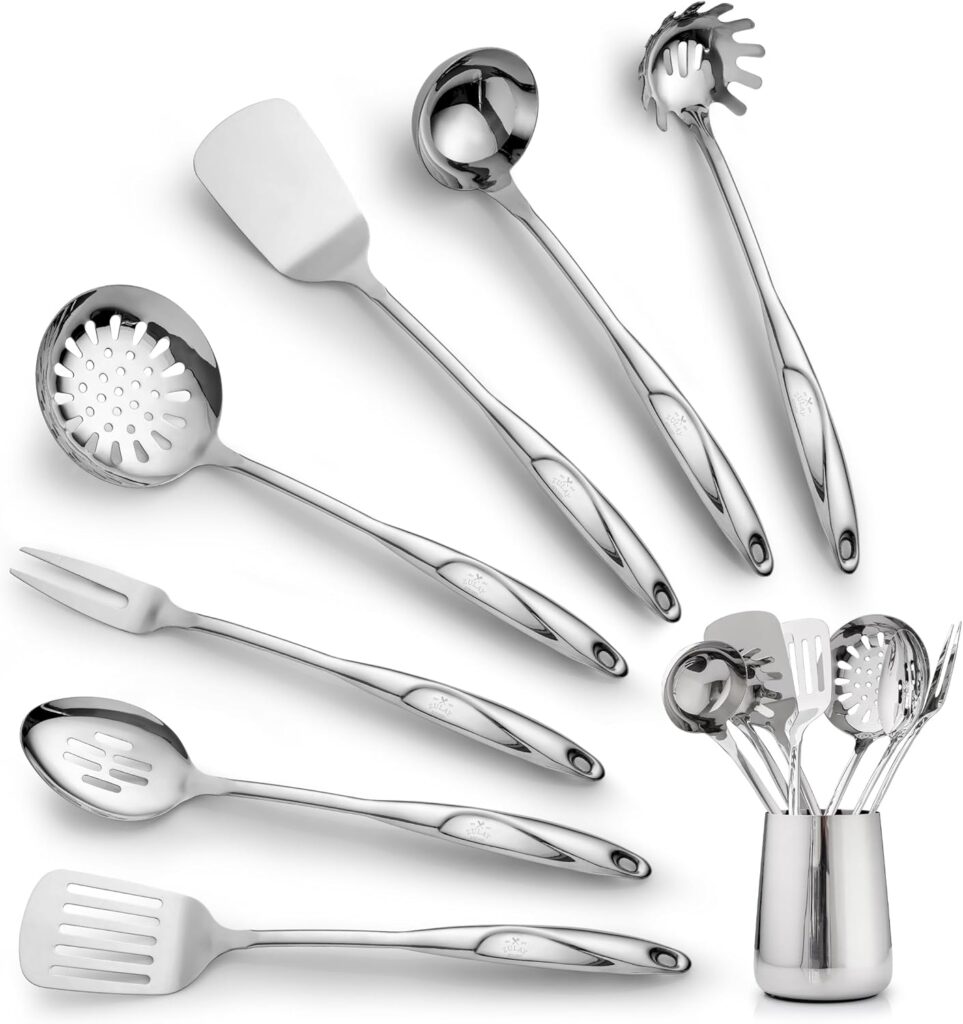
Why these utensils are useful:
• durable stainless steel construction
• safe for high cooking temperatures
• resistant to stains and odors
• long lifespan compared to plastic utensils
Common uses include:
• stirring sauces


• flipping vegetables
• serving cooked food
Tip
Use stainless steel utensils with stainless steel or cast iron cookware for maximum durability.
4. Stainless Steel Mixing Bowl Set
Mixing bowls often contain plastic or coated materials that degrade over time.
The Priority Chef Stainless Steel Mixing Bowls Set provides a reliable alternative.
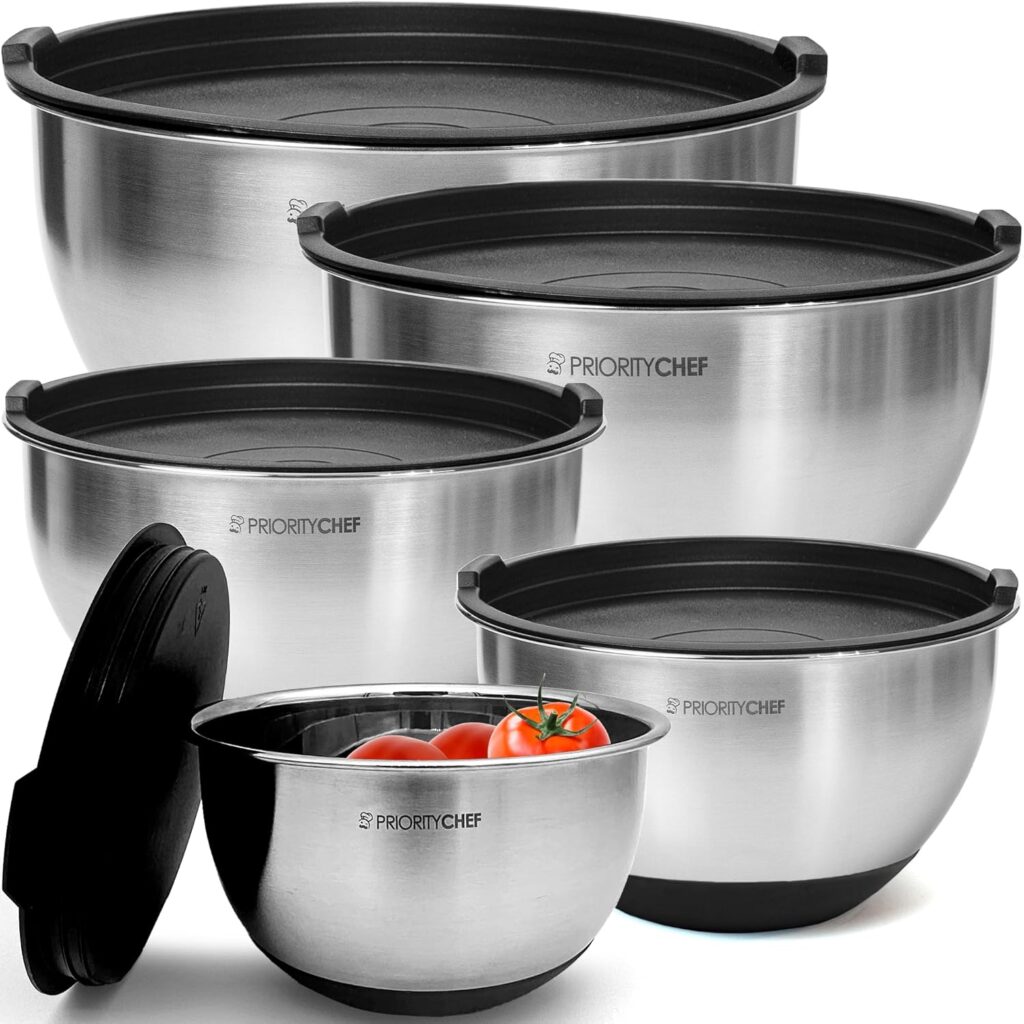
Key advantages:
• stainless steel construction without chemical coatings
• non-slip base for stability during mixing
• airtight lids for storage
• stackable design saves kitchen space
These bowls are excellent for:
• baking preparation
• mixing salads
• marinating meats
• storing prepared ingredients
Tip
Use separate bowls for prepping vegetables, proteins, and sauces. This keeps cooking organized and efficient.
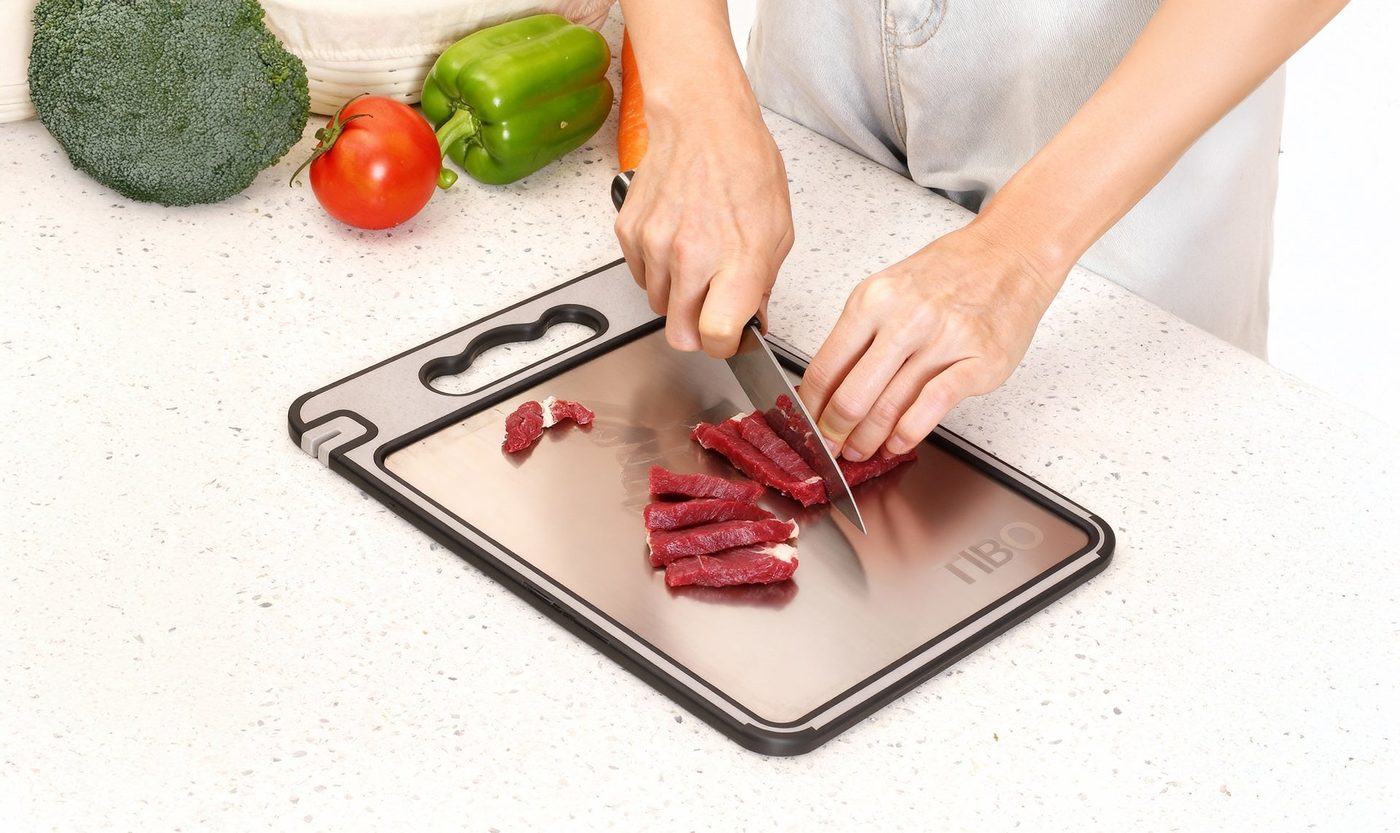
5. Wooden Cutting Boards
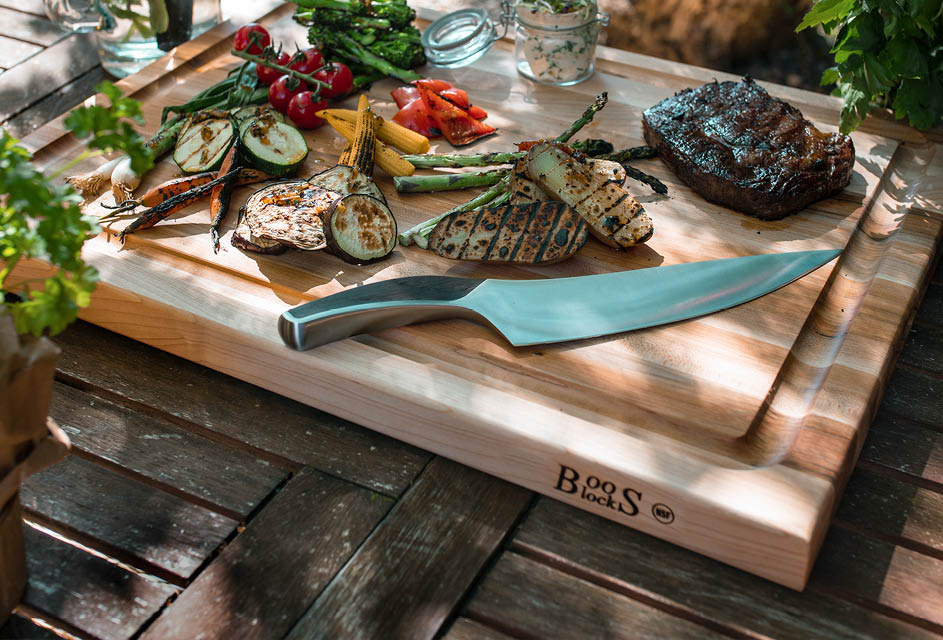
Wood cutting boards remain one of the best natural surfaces for food preparation.
Popular woods include:
• maple
• walnut
• teak
Advantages:
• gentle on knives
• durable with proper care
• natural material without plastic
Maintenance tip
Apply food-grade mineral oil occasionally to prevent drying and cracking.
6. Cast Iron Cookware
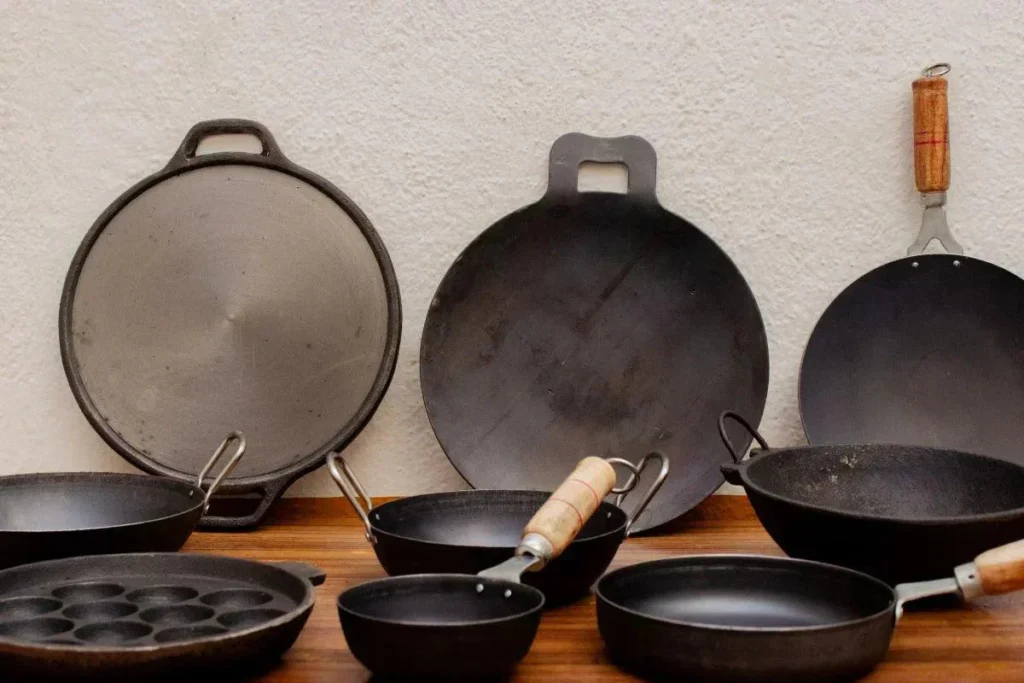
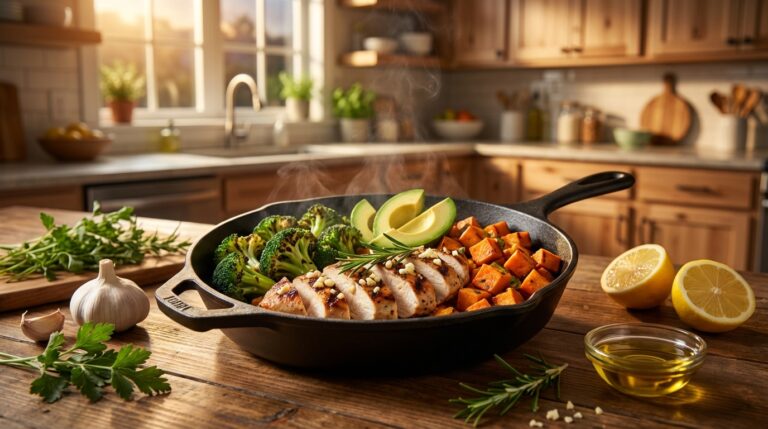
Cast iron pans remain a staple in many non-toxic kitchens.
Benefits include:
• excellent heat retention
• natural cooking surface when seasoned
• extremely durable
Cast iron works well for:
• roasting vegetables
• searing meat
• skillet meals
Tip
Dry the pan immediately after washing and apply a thin layer of oil to maintain seasoning.
7. Natural Kitchen Cleaning Products
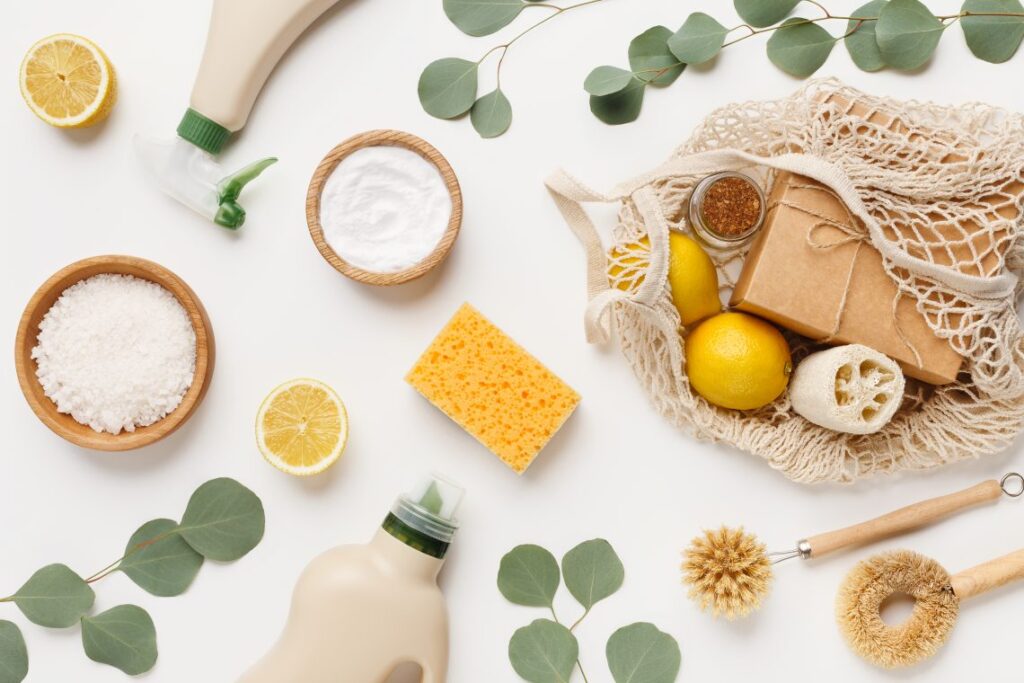
Non-toxic kitchens also rely on simple cleaning ingredients.
Common natural cleaning solutions include:
• vinegar for removing grease
• baking soda for scrubbing surfaces
• plant-based dish soaps
These ingredients clean effectively without leaving chemical residues on food preparation surfaces.
How to Transition to a Non-Toxic Kitchen
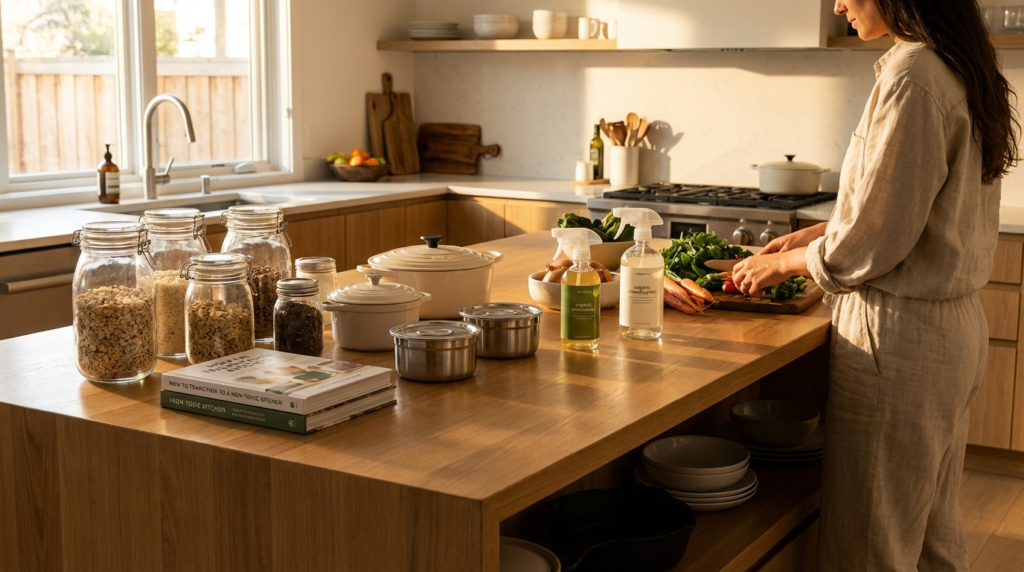
Replacing everything at once is rarely necessary. A gradual approach works best.
Start with the items used most often:
- Replace scratched non-stick pans
- Switch to glass storage containers
- upgrade cooking utensils
- add stainless steel cookware
- improve food storage systems
Over time your kitchen becomes more durable, organized, and healthier.
Final Thoughts
A non-toxic kitchen focuses on materials that last for years and perform reliably. Stainless steel cookware, glass containers, wooden cutting boards, and durable kitchen tools create a strong foundation for safer cooking.
Instead of replacing everything at once, focus on upgrading the tools used every day. Over time these small changes transform your kitchen into a cleaner and more dependable cooking space.