
50/30/20 Budget Rule: Practical Guide for Families
Managing money as a family feels overwhelming when expenses keep growing. Rent, groceries, school costs, and unexpected bills quickly add up. Without a clear system, money disappears fast.
Unlock 300+ Easy Recipes You’ll Actually Make
New recipes sent daily. Free forever!

The 50/30/20 budget rule gives you a simple structure to take control of your finances, reduce stress, and build long-term stability.
This guide breaks it down step by step so you can apply it in real life.
What Is the 50/30/20 Budget Rule?
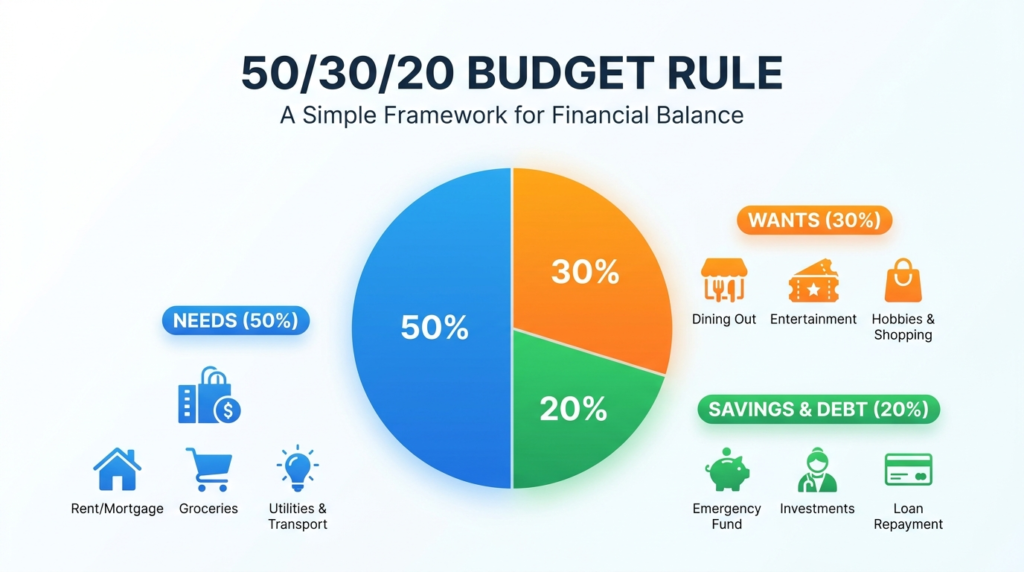
The 50/30/20 rule divides your income into three categories:
- 50% Needs
- 30% Wants
- 20% Savings and debt repayment
This method focuses on balance. You cover essentials, enjoy life, and still build financial security.

Why Families Should Use the 50/30/20 Rule
Families deal with multiple expenses at once. A structured system helps you:
- Avoid overspending
- Plan monthly expenses with clarity
- Reduce financial stress
- Save consistently
Search trends show high interest in terms like monthly budget planner, budget template, and family budget, which confirms that families are actively looking for simple budgeting systems .
Step 1: Allocate 50% for Needs
Needs include essential expenses you must pay every month:
- Rent or mortgage
- Utilities
- Groceries
- Transportation
- Insurance
- Minimum debt payments
For families, groceries and housing take the largest share. Many people search for grocery list on a budget and family meals on a budget, which shows how critical this category is .
Practical tip
Track your last 30 days of spending. If your needs exceed 50%, focus on reducing fixed costs first.
Step 2: Allocate 30% for Wants
Wants are lifestyle choices that improve your quality of life:
- Dining out
- Streaming services
- Shopping
- Entertainment
- Vacations
This category often causes budget problems. Families tend to underestimate how much they spend here.
Practical tip
Set limits per category. For example:
- Dining out: once per week
- Subscriptions: max 2 platforms
Step 3: Allocate 20% for Savings and Debt

This is the most important part of the rule.
It includes:
- Emergency fund
- Retirement savings
- Investments
- Extra debt payments
Even small contributions matter. Consistency builds long-term results.


Practical tip
Automate savings right after you receive your income. This prevents overspending.
Example: Monthly Family Budget

Let’s say your family earns $3,000 per month:
- Needs (50%): $1,500
- Wants (30%): $900
- Savings/Debt (20%): $600
This structure keeps your finances balanced while allowing flexibility.
How to Start a Family Budget (Step-by-Step)

1. Calculate Your Total Income
Include all sources:
- Salary
- Side income
- Benefits
2. List All Expenses
Separate them into:
- Fixed (rent, bills)
- Variable (groceries, entertainment)
3. Apply the 50/30/20 Split
Adjust percentages based on your situation if needed.
4. Use a Budget Tool
Popular options include:
- Monthly budget planner
- Budget spreadsheet
- Budget tracker apps
High search demand for budget planner, budget template, and budget tracker shows people prefer visual tools to stay consistent .
Common Mistakes Families Make

1. Ignoring Small Expenses
Small purchases add up fast.
2. Not Adjusting for Real Life
The rule is flexible. If your needs are 60%, adjust gradually.
3. Skipping Savings
Many families focus only on bills. This creates long-term financial stress.

How to Adapt the Rule for Tight Budgets

If your income is limited:
- Start with 60/20/20
- Reduce wants temporarily
- Focus on building a small emergency fund
Over time, move toward the 50/30/20 balance.
Tips to Save More as a Family

- Plan meals weekly
- Use a grocery budget list
- Cut unused subscriptions
- Buy in bulk when possible
- Track spending weekly
Search trends like budget meal planning, cheap meals for families, and budget grocery list show families actively look for ways to reduce costs .
Benefits of the 50/30/20 Rule
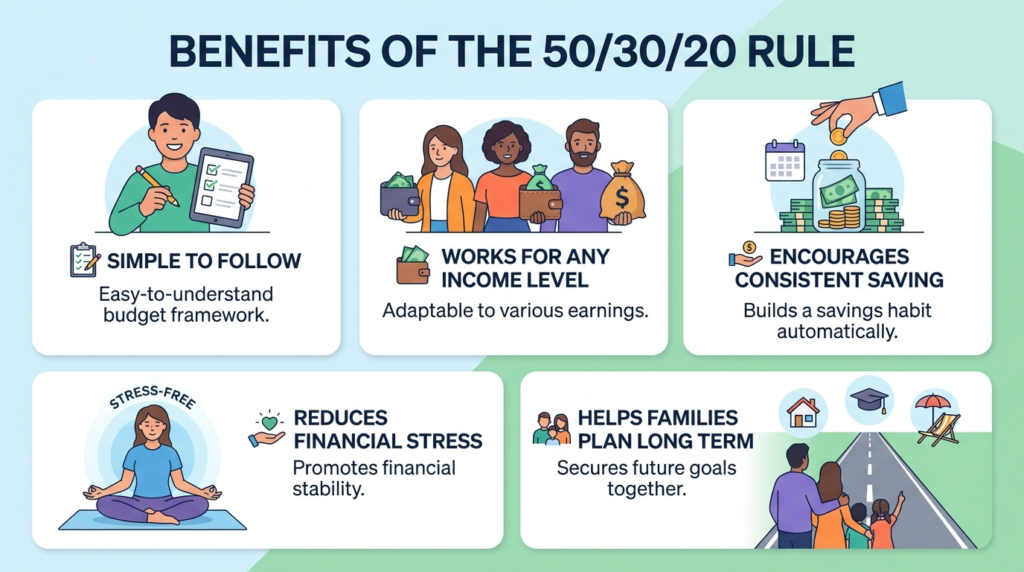
- Simple to follow
- Works for any income level
- Encourages consistent saving
- Reduces financial stress
- Helps families plan long term
Final Thoughts

The 50/30/20 budget rule works because it is simple and flexible. You do not need complex spreadsheets or financial expertise.
Start small. Track your expenses. Adjust your percentages.
Over time, you build control, reduce stress, and create financial stability for your family.